
Quick answer:
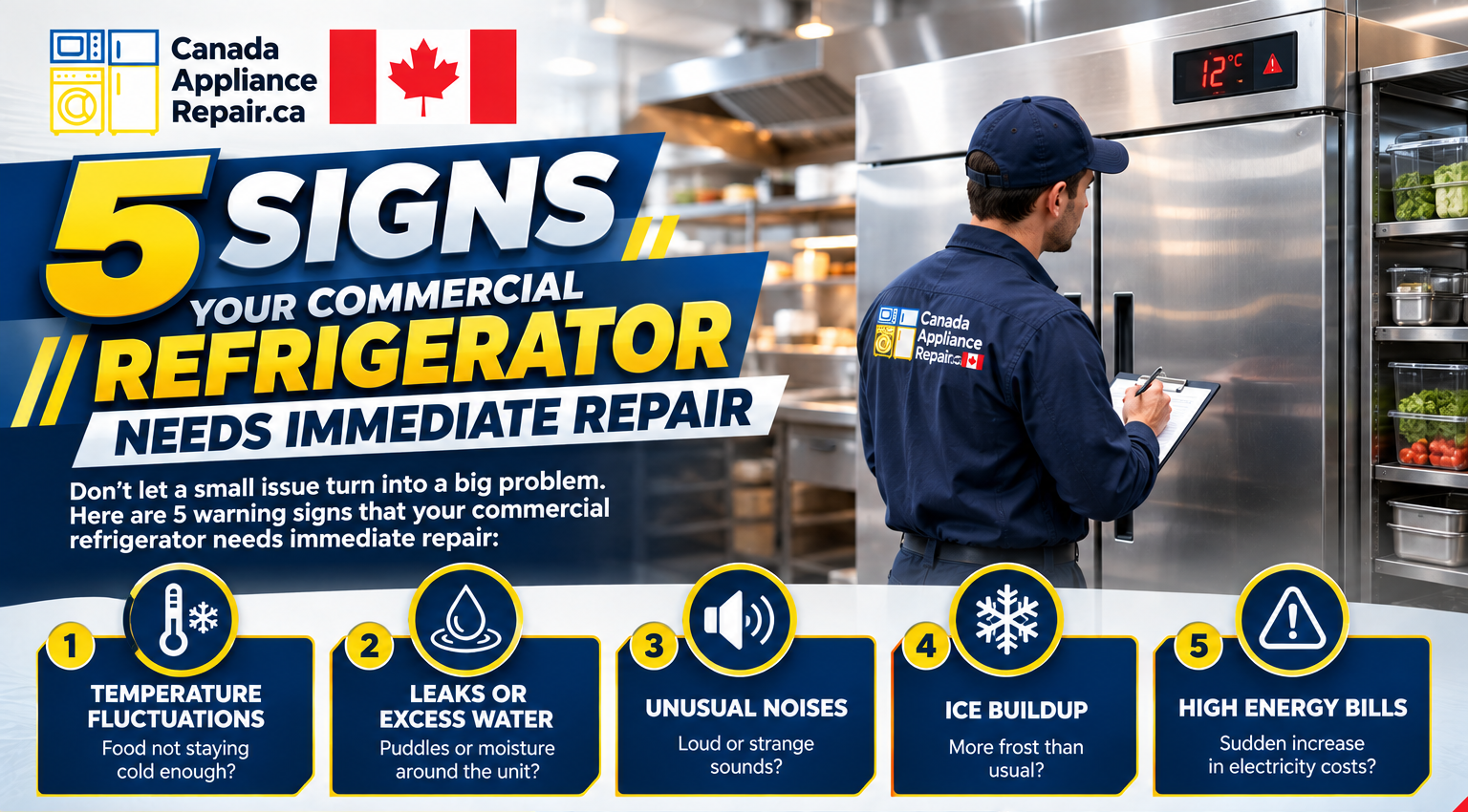
The five common signs your commercial refrigerator needs immediate repair are inconsistent temperatures, unusual noises, excessive frost or ice, water leaks, and a refrigerator that runs constantly. These symptoms may indicate problems with the thermostat, condenser, evaporator, door seal, drainage system, or refrigeration components.
What are the signs your commercial refrigerator needs immediate repair?
Here are five warning signs commercial kitchen and food-service operators should not ignore.
1. The refrigerator is not maintaining a safe temperature
Temperature problems are one of the most important reasons to arrange commercial refrigerator repair. If food is becoming warmer than expected, the unit may have a faulty thermostat, blocked airflow, dirty condenser coils, damaged door gaskets, or a refrigeration-system problem.
A commercial refrigerator should maintain a consistent operating temperature appropriate for the food being stored. If the temperature repeatedly fluctuates, use a reliable thermometer to verify the actual internal temperature rather than relying only on the display.
Take action: Move temperature-sensitive food to a properly operating refrigerator if necessary and arrange professional service promptly.
2. You hear unusual or increasingly loud noises
Commercial refrigerators naturally make sounds as compressors, fans, and other components operate. However, sudden changes in sound deserve attention.
Listen for:
- Loud humming or buzzing
- Clicking that occurs repeatedly
- Grinding or scraping
- Rattling or vibrating
- Fans that suddenly become unusually loud
For example, a scraping noise may indicate that a fan is contacting ice or another component. Repeated clicking can sometimes be associated with compressor or electrical problems.
Do not wait for the refrigerator to stop working completely before investigating unusual noises.
3. Excessive frost or ice is building up
A small amount of frost may occur in some refrigeration equipment, but heavy ice accumulation inside a commercial refrigerator is not normal.
Excessive frost can restrict airflow and make it harder for the unit to maintain the desired temperature. Possible causes include a defective door gasket, frequent door opening, airflow problems, a failed defrost component, or excessive moisture entering the cabinet.
If ice is repeatedly returning after being removed, the underlying cause should be diagnosed rather than simply treating the visible frost.
4. Water is leaking around or inside the refrigerator
Water pooling underneath or inside a commercial refrigerator can indicate a blocked drain, damaged drain line, excessive condensation, or a defrost-related problem.
A small leak can become a larger operational issue if water reaches electrical components, damages flooring, or creates a slip hazard.
What should you do?
- Keep the area around the leak dry.
- Check whether the door is closing properly.
- Avoid attempting complex repairs yourself.
- Schedule professional commercial appliance service if the leak continues.
5. The refrigerator runs constantly
A refrigerator that rarely cycles off may be working harder than it should. Constant operation can increase energy consumption while still failing to maintain the correct temperature.
Potential causes include dirty condenser coils, inadequate airflow, a failing fan, damaged door seals, excessive frost, incorrect temperature settings, or a refrigeration-system fault.
If the unit is running continuously and the cabinet is still too warm, treat the problem as a priority rather than waiting for a complete breakdown.
Why should commercial refrigerator problems be repaired quickly?
Commercial refrigeration problems can affect more than equipment performance. Temperature instability can put perishable inventory at risk, while leaks, electrical issues, or mechanical failures can interfere with daily operations.
For businesses that depend on refrigeration, early diagnosis can also help identify a repairable component before a larger system failure occurs.
For related appliance maintenance information, see our blog resources on commercial appliance care and repair tips.
Should you repair or replace a commercial refrigerator?
The answer depends on the refrigerator’s age, condition, repair history, energy efficiency, and the nature of the failure.
| Situation | Possible Approach |
|---|---|
| Minor component failure | Repair may be practical |
| Damaged door gasket | Usually repairable |
| Blocked drain or airflow | Service and cleaning may resolve it |
| Repeated major breakdowns | Replacement may need consideration |
| Older inefficient equipment | Compare repair cost with replacement cost |
A qualified technician can inspect the equipment and explain the available options before you make a decision.
What should you do when a commercial refrigerator starts failing?
Start by checking the temperature with an independent thermometer and documenting unusual symptoms. Note when the problem occurs, whether the refrigerator is making unfamiliar sounds, and whether frost or water is present.
Avoid dismantling refrigeration components or attempting electrical repairs without appropriate training. Instead, contact a professional appliance technician who can identify the underlying problem safely.
If you need professional help, Canada Appliance Repair and Installation serves Toronto and the GTA with appliance repair and installation services.
How can you prevent commercial refrigerator breakdowns?
Regular maintenance can help identify developing problems before they become disruptive. Keep condenser areas clean, make sure doors close completely, inspect door gaskets, avoid blocking internal airflow, and monitor refrigerator temperatures regularly.
Staff should also know the warning signs. A refrigerator that suddenly becomes noisy, warm, wet, or heavily frosted should be reported instead of being ignored.
For businesses requiring professional assistance, our commercial refrigerator repair service can help diagnose refrigeration problems and determine the appropriate repair.
Frequently Asked Questions
Common warning signs include unstable temperatures, unusual noises, excessive frost, water leaks, and continuous operation. Food becoming warmer than expected is particularly important because it may indicate that the refrigerator is no longer maintaining appropriate storage conditions.
A commercial refrigerator may run continuously because of dirty condenser coils, poor airflow, a damaged door gasket, excessive frost, a faulty fan, incorrect settings, or a refrigeration-system problem. If continuous operation does not maintain the required temperature, professional diagnosis is recommended.
Loud buzzing, grinding, rattling, or scraping can indicate a fan, compressor, mounting, or ice-related problem. Some operating noise is normal, but a sudden change in sound or increasingly loud operation should be investigated before the equipment develops a more serious failure.
Water leaks can result from blocked drains, damaged drain lines, excessive condensation, or defrost-system problems. Persistent water around the refrigerator should not be ignored because it can create slip hazards, damage flooring, and potentially affect nearby electrical components.
Service frequency depends on the equipment, workload, environment, and manufacturer’s recommendations. High-use commercial kitchens may require more frequent inspection and cleaning. Regular maintenance should include checking temperature performance, airflow, condenser condition, door seals, and other critical components.
Many commercial refrigerator problems can be repaired when the underlying component is serviceable and replacement parts are available. A technician should consider the equipment’s age, condition, repair history, energy consumption, and repair cost before recommending whether repair or replacement makes practical sense.
Check the power supply and verify the actual internal temperature. Keep the refrigerator closed as much as possible and protect temperature-sensitive inventory according to your food-safety procedures. Arrange professional service promptly to determine why the unit is not cooling properly.
Conclusion
Recognizing the signs your commercial refrigerator needs immediate repair can help protect your inventory and reduce unexpected business disruption. Temperature problems, unusual noises, excessive frost, water leaks, and continuous operation should all receive attention.
When a commercial refrigerator is showing these symptoms, timely professional diagnosis can help identify the cause and determine whether a repair is appropriate.
Need professional commercial refrigeration repair? Call (416) 887-5839 today to schedule fast, dependable service anywhere in Toronto and the GTA.