
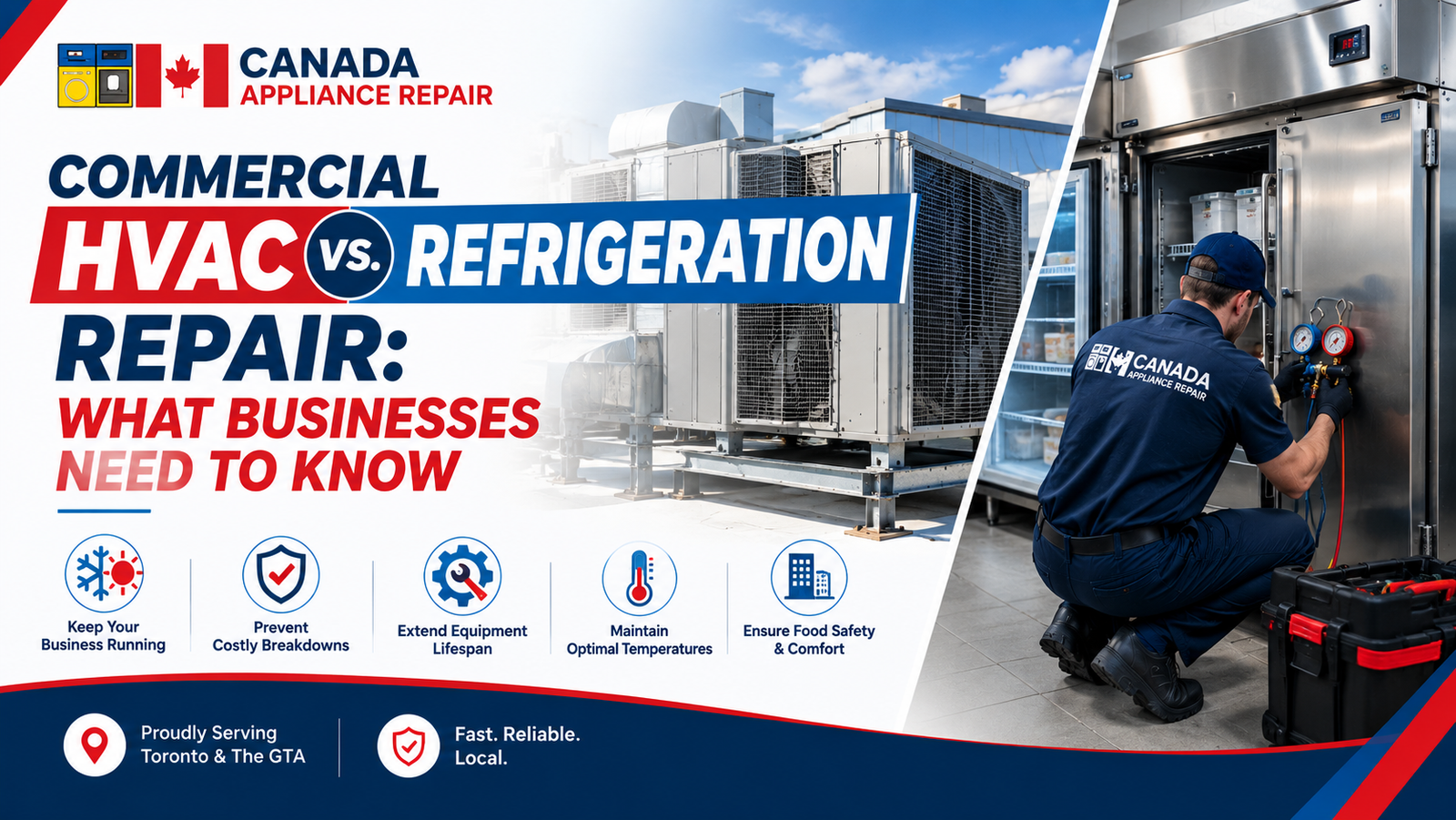
Running a restaurant, grocery store, café, food-service operation, or other commercial property in Toronto and the GTA means keeping critical equipment operating reliably. Two systems that are often confused are commercial HVAC and refrigeration systems. While both involve temperature control, they serve very different purposes—and knowing the difference can help you get the right repair before a small issue becomes an expensive business interruption.
What Is the Difference Between Commercial HVAC and Refrigeration Repair?
Commercial HVAC repair focuses on systems that control indoor air temperature, ventilation, humidity, and air quality. Refrigeration repair focuses on equipment designed to keep food, beverages, ingredients, or other products cold or frozen. Although both use compressors and refrigeration principles, their operating temperatures, components, controls, and applications are different.
What Does Commercial HVAC Repair Include?
Commercial HVAC stands for heating, ventilation, and air conditioning. These systems maintain a comfortable and controlled indoor environment for employees, customers, tenants, and equipment.
Commercial HVAC repair may involve:
- Air conditioners and rooftop units
- Furnaces and heating equipment
- Heat pumps
- Blower motors and fans
- Thermostats and control systems
- Ductwork and airflow problems
- Refrigerant-related issues
- Electrical components
- Ventilation equipment
For example, a Toronto restaurant may notice that the dining area is comfortable in the morning but becomes excessively hot during the dinner rush. The problem could involve restricted airflow, a failing blower motor, an undersized system, a dirty condenser, or another HVAC component.
Professional diagnosis matters because replacing a component without identifying the underlying cause can lead to repeated failures.
What Does Commercial Refrigeration Repair Cover?
Commercial refrigeration keeps products at controlled low temperatures. It is particularly important for restaurants, supermarkets, cafés, convenience stores, bakeries, bars, and other businesses that depend on chilled or frozen inventory.
Common equipment includes:
- Walk-in coolers
- Walk-in freezers
- Reach-in refrigerators
- Display refrigerators
- Commercial freezers
- Prep tables
- Ice machines
- Refrigerated counters
A refrigeration problem can become urgent very quickly. If a walk-in cooler is not maintaining temperature, perishable food can deteriorate, resulting in product waste and potential food-safety concerns.
For businesses, early diagnosis is usually far less disruptive than waiting until the entire refrigeration system stops working.
Commercial HVAC vs. Refrigeration Repair: What Is the Difference?
| Factor | ❄️ Commercial HVAC | 🧊 Commercial Refrigeration |
|---|---|---|
| Primary Purpose | Maintains indoor comfort, heating, cooling, and air quality. | Preserves food, beverages, and temperature-sensitive products. |
| Typical Environment | Offices, restaurants, retail stores, warehouses, and commercial buildings. | Kitchens, grocery stores, walk-in coolers, freezers, and food facilities. |
| Temperature Range | Comfortable indoor temperatures for occupants. | Much colder operating temperatures for storage and preservation. |
| Common Equipment | Rooftop HVAC units, furnaces, air conditioners, heat pumps, and ventilation systems. | Walk-in coolers, freezers, display refrigerators, ice machines, and reach-in units. |
| Main Concern | Comfort, airflow, humidity, and ventilation. | Maintaining safe food and product temperatures. |
| Failure Impact | Employee discomfort, poor indoor air quality, and operational disruption. | Food spoilage, inventory loss, health code violations, and business downtime. |
The key difference is what the system is designed to protect. HVAC primarily protects the indoor environment, while commercial refrigeration protects temperature-sensitive products.
What Are the Warning Signs You Need HVAC Repair?
Businesses should arrange professional inspection when they notice:
- Uneven heating or cooling
- Weak airflow
- Unusual banging, rattling, or squealing
- Frequent cycling
- Unexpected increases in energy consumption
- Water around equipment
- Persistent odors
- Thermostat or control problems
Ignoring these symptoms can allow a relatively manageable problem to develop into a major equipment failure.
What Are the Signs of a Commercial Refrigeration Problem?
Watch for:
- Food or beverages becoming warmer than expected
- Ice buildup around the evaporator
- Excessive condensation
- Unusual compressor noise
- A refrigerator running continuously
- Temperature fluctuations
- Door-seal problems
- Water leaking inside or around the unit
If temperatures are rising inside a commercial refrigerator or freezer, move quickly. Check the temperature display and doors first, but avoid repeatedly resetting equipment without understanding the cause.
How Can Businesses Prevent Expensive HVAC and Refrigeration Repairs?
Preventive maintenance is one of the most practical ways to reduce unexpected downtime. Businesses should keep condenser areas clean, maintain appropriate airflow, inspect door seals, replace HVAC filters as recommended, and monitor temperature controls.
It is also useful to keep records of recurring problems. If the same compressor, motor, electrical component, or temperature-control issue repeatedly fails, a technician can determine whether repair, component replacement, or equipment replacement makes the most financial sense.
For professional help with heating and cooling problems, see Commercial HVAC Repair Services.
You can also visit Canada Appliance Repair to learn more about the company’s repair services throughout Toronto and the GTA.
Why Should Toronto and GTA Businesses Choose Professional Repair?
Commercial HVAC and refrigeration equipment can involve electrical systems, refrigerants, motors, compressors, controls, and other specialized components. Attempting complex repairs without the appropriate technical knowledge can create additional damage or safety risks.
Canada Appliance Repair states that it serves Toronto and the GTA, provides same-day service, and has technicians experienced with electrical and gas appliances. The company also identifies its technicians as licensed and insured and notes TSSA-certified gas contractor services.
Conclusion:
Understanding the difference between commercial HVAC vs. refrigeration repair helps businesses respond to problems faster and choose the appropriate service. HVAC problems primarily affect indoor comfort and air quality, while refrigeration failures can directly threaten temperature-sensitive inventory. Regular maintenance, early diagnosis, and professional repairs can help Toronto and GTA businesses reduce downtime, protect equipment, and avoid unnecessary operating costs.
Frequently Asked Questions
No. Commercial HVAC systems regulate indoor heating, cooling, ventilation, and air quality, while commercial refrigeration systems maintain much lower temperatures to preserve food and other products. Although both can use refrigeration technology and similar components, their designs, controls, operating conditions, and applications are different.
A business should consider professional HVAC repair when it experiences inconsistent temperatures, weak airflow, unusual noises, water leaks, repeated electrical issues, poor heating or cooling performance, or unexplained increases in energy use. Prompt inspection can help identify failing components before they cause a complete system shutdown.
Common problems include inadequate cooling, temperature fluctuations, excessive frost, refrigerant issues, dirty condenser components, failing fans, compressor problems, damaged door gaskets, and electrical or control failures. Because refrigeration directly affects perishable inventory, businesses should investigate temperature problems promptly rather than waiting for complete equipment failure.
Some technicians have experience with both systems, but commercial equipment varies considerably. HVAC and refrigeration require knowledge of different applications, temperature requirements, controls, and components. When choosing a repair company, businesses should confirm that the technician has relevant experience with the specific commercial equipment that requires service.
Restaurants can reduce breakdown risks by keeping condenser areas clean, checking door seals, maintaining proper airflow, monitoring temperatures, avoiding unnecessary door opening, and scheduling professional maintenance. Staff should also report unusual noises, temperature changes, or excessive frost immediately so developing problems can be investigated.
Yes. Preventive maintenance can identify worn components, airflow restrictions, electrical problems, dirty coils, and other issues before they become major failures. For businesses, the value is not only equipment longevity but also reduced downtime, more consistent indoor temperatures, and better operational reliability.
First, verify that the unit has power and that the doors are closing properly. Check the displayed temperature and avoid unnecessarily opening the refrigerator. If the temperature continues rising, contact a qualified commercial refrigeration technician promptly, especially when the unit contains perishable inventory.
Need professional commercial HVAC repair? Call (416) 887-5839 today to schedule fast, dependable service anywhere in Toronto and the GTA.