
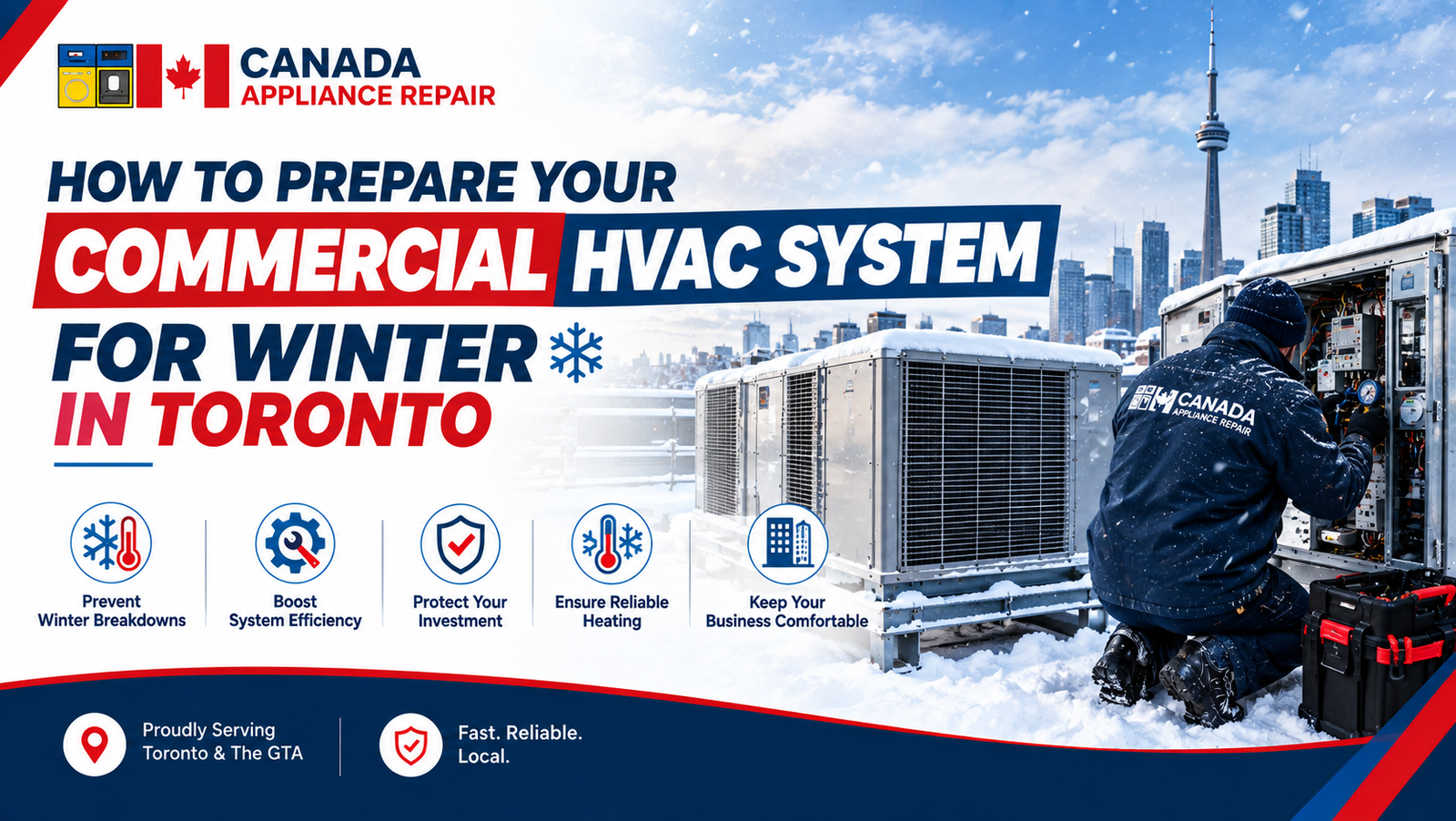
Toronto winters can put significant demands on commercial heating equipment. As temperatures drop, businesses rely on their HVAC systems to maintain comfortable indoor conditions, protect operations, and keep employees and customers comfortable. Proper commercial HVAC winter preparation in Toronto can help identify problems before they turn into unexpected heating failures.
How Should You Prepare a Commercial HVAC System for Winter?
The best approach is to inspect and service the system before consistently cold weather arrives. Check filters, airflow, thermostats, heating components, electrical connections, and outdoor equipment. Businesses should also review previous repair issues and arrange professional service for anything that could affect reliable heating during Toronto’s coldest months.
What Should Be Checked Before Winter?
A winter HVAC inspection should cover several important areas.
1. Check or Replace Air Filters
Dirty filters restrict airflow and make HVAC equipment work harder. Restricted airflow can contribute to uneven heating, higher energy consumption, and additional strain on system components.
Check filters according to the manufacturer’s recommendations and replace them when necessary.
2. Inspect Heating Components
A commercial heating system may include furnaces, heat pumps, rooftop units, burners, motors, controls, and other components depending on the equipment.
A professional inspection can identify worn parts or performance problems before the heating system is working continuously during a cold spell.
3. Test the Thermostat and Controls
A thermostat or control problem can make an otherwise functional HVAC system appear unreliable. Check that temperature readings are accurate and that the system responds correctly when heating is requested.
For larger commercial properties, zone controls should also be checked so different areas receive appropriate heating.
4. Check Airflow and Ductwork
Weak airflow can prevent warm air from reaching parts of a building effectively. Blocked vents, dirty components, damaged ductwork, or mechanical problems can all affect air distribution.
For example, if an office near the entrance remains cold while interior rooms are comfortable, the issue may involve airflow or heat distribution rather than simply needing a higher thermostat setting.
Why Is Winter HVAC Maintenance Important for Toronto Businesses?
Winter maintenance can help reduce the likelihood of an unexpected heating failure when equipment is under heavy demand. It also gives business owners an opportunity to identify smaller problems before they develop into more expensive repairs.
Businesses should pay particular attention to:
Unusual noises or vibrations
Weak or inconsistent airflow
Uneven indoor temperatures
Frequent system cycling
Unusual odors
Water or other leaks
Unexpected increases in energy consumption
Thermostat or control problems
Canada Appliance Repair’s existing guidance similarly recommends addressing changes in HVAC performance before they develop into major failures.
What Can Businesses Do to Protect HVAC Equipment in Winter?
Simple preventive steps can make a difference:
Keep outdoor HVAC equipment clear of leaves, snow, ice, and other obstructions.
Keep vents and air returns unobstructed.
Replace filters as recommended.
Monitor indoor temperatures in different areas of the building.
Record unusual noises, odors, or performance changes.
Schedule professional service before a small problem becomes a shutdown.
Businesses should never attempt complex electrical, gas, or refrigerant repairs without appropriate training and equipment.
When Should You Call a Commercial HVAC Professional?
Call a qualified technician if the system cannot maintain the required temperature, repeatedly shuts down, produces unusual mechanical sounds, has electrical problems, or shows signs of leakage.
If heating suddenly fails during severe weather, prompt professional diagnosis is particularly important for businesses that depend on stable indoor temperatures. For additional information, see our guide on When Does Your Commercial HVAC System Need Professional Repair?
Winter HVAC Preparation: Maintenance vs. Emergency Repair
| Preventive Maintenance | Emergency Repair |
|---|---|
| Planned before peak winter demand | Usually occurs after a failure |
| Identifies developing problems | Addresses an immediate problem |
| Can reduce unexpected downtime | May interrupt business operations |
| Allows better scheduling | Often requires urgent service |
| Helps maintain equipment performance | Focuses on restoring operation |
For businesses that need professional HVAC assistance, Canada Appliance Repair provides commercial HVAC repair and installation services.
What Are the Benefits and Limitations of Winter HVAC Preparation?
Benefits
-
Helps identify developing equipment problems
-
Supports more reliable heating
-
Can reduce unexpected downtime
-
Helps maintain consistent indoor temperatures
-
May improve operating efficiency
Limitations
-
Maintenance cannot prevent every mechanical failure
-
Older equipment may still require major repairs
-
Some problems only become apparent under heavy demand
-
Professional servicing adds a maintenance expense
For more information about Canada Appliance Repair and its services throughout Toronto and the GTA, visit the Canada Appliance Repair.
Frequently Asked Questions
Commercial HVAC equipment should be maintained according to the manufacturer’s recommendations and the system’s operating demands. Businesses with long operating hours or high heating loads may need more frequent inspections. A professional technician can recommend an appropriate schedule based on the equipment, building, usage, and previous repair history.
Start by checking the thermostat settings and ensuring vents and returns are not blocked. A dirty filter can also restrict airflow. If the problem continues, the system may have a mechanical, electrical, control, or heating-component issue that requires professional diagnosis rather than repeated thermostat adjustments.
Cold weather itself does not necessarily damage a properly maintained commercial HVAC system, but extreme conditions can increase operating demands and expose existing weaknesses. Snow, ice, blocked outdoor components, airflow restrictions, and worn parts can contribute to performance problems. Seasonal inspection helps identify issues before the system faces prolonged winter demand.
Start with basic maintenance: replace dirty filters, maintain proper airflow, keep equipment clear, and address heating problems promptly. Monitoring energy consumption can also reveal unusual increases. If heating costs rise without a corresponding change in building usage, professional HVAC inspection can help determine whether equipment performance is contributing to the increase.
No. Waiting for complete failure can create unnecessary disruption, particularly during Toronto’s coldest periods. Warning signs such as weak airflow, unusual noises, inconsistent temperatures, frequent cycling, or rising energy use should be investigated early. Preventive service gives businesses a better opportunity to address problems before they become emergencies.
Yes. Regular maintenance can help identify worn components, airflow restrictions, control problems, and other developing issues before they cause major disruption. While maintenance cannot guarantee that equipment will never fail, it can support reliable operation and help businesses plan repairs instead of dealing with an unexpected heating shutdown.
Conclusion
Proper commercial HVAC winter preparation in Toronto gives businesses a practical way to prepare for heavy heating demand before the coldest weather arrives. Checking filters, airflow, controls, heating components, and outdoor equipment can help identify problems early. When professional repair is needed, timely service can help protect business operations, indoor comfort, and HVAC performance throughout the winter.
Need professional commercial HVAC repair? Call (416) 887-5839 today to schedule fast, dependable service anywhere in Toronto and the GTA.