
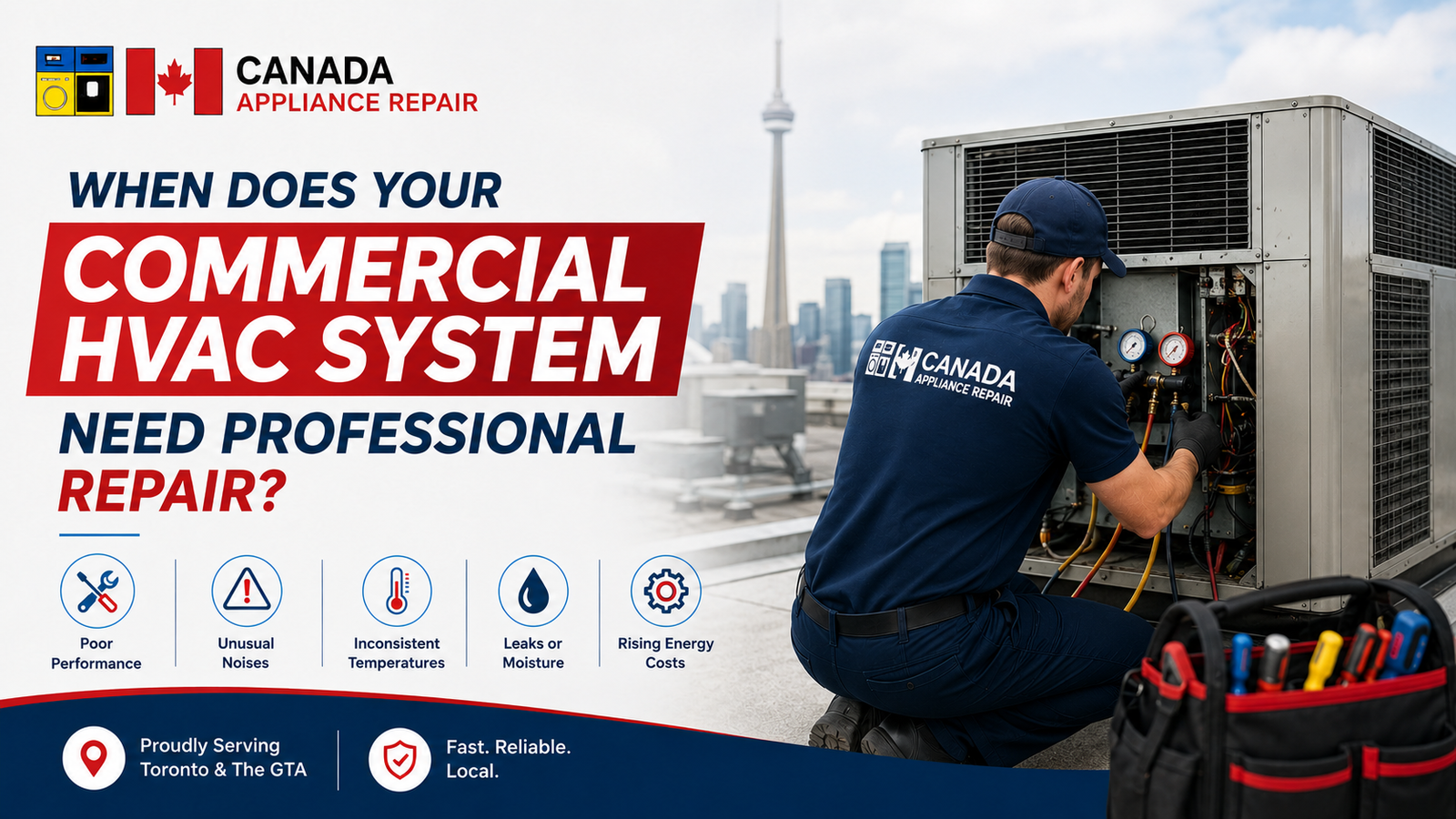
Your commercial HVAC system needs professional repair when it stops maintaining consistent temperatures, makes unusual noises, produces weak airflow, cycles frequently, leaks water or refrigerant, increases energy consumption, or shows electrical or control problems. Prompt service can prevent a small mechanical issue from becoming a major system failure.
What Are the Signs Your Commercial HVAC System Needs Professional Repair?
Some HVAC problems are obvious, while others develop gradually. Paying attention to changes in system performance can help you arrange repairs before a complete breakdown occurs.
1. Uneven Temperatures Throughout the Building
If one area of your commercial property feels cold while another remains warm, the HVAC system may have an airflow, thermostat, ductwork, or mechanical problem.
Uneven temperatures are particularly noticeable in larger offices, retail spaces, and multi-zone buildings. A technician can determine whether the problem involves the equipment itself or how conditioned air is distributed.
2. Weak or Reduced Airflow
Weak airflow from vents can indicate a clogged filter, blocked ductwork, failing blower motor, damaged components, or another underlying issue.
Changing an accessible air filter may solve a simple restriction. However, if airflow remains weak afterward, professional HVAC diagnosis is recommended.
3. Strange Sounds or Unusual Odors
Commercial HVAC equipment should not suddenly begin producing loud banging, grinding, rattling, squealing, or scraping sounds.
Unusual smells also deserve attention. A burning odor may indicate an electrical or mechanical problem, while musty odors can point toward moisture or microbial growth within parts of the system.
4. Rising Energy Bills Without Higher Usage
A sudden increase in electricity or gas consumption can be an early warning sign of declining HVAC efficiency.
Dirty coils, restricted airflow, refrigerant problems, worn motors, faulty controls, and aging components can make the equipment work harder to maintain the same indoor temperature.
When Is a Commercial HVAC Problem an Emergency?
Not every HVAC problem requires immediate emergency service, but certain symptoms should not be ignored.
Contact a qualified professional promptly if you notice:
- Burning smells or signs of electrical overheating
- Smoke or visible sparks
- Refrigerant or water leaks
- Complete loss of heating or cooling
- Repeated circuit-breaker trips
- Severe vibration or loud mechanical noises
- Unusual pressure or temperature readings
- Water accumulating around indoor equipment
For example, a small condensate leak may initially appear harmless. If ignored, however, continued moisture can damage ceilings, flooring, electrical components, or other parts of the building.
Can You Repair a Commercial HVAC System Yourself?
Basic maintenance, such as replacing filters and keeping outdoor equipment clear of debris, can often be handled by building staff. Professional repairs are different.
Commercial HVAC systems contain electrical connections, motors, compressors, refrigerant circuits, controls, and other specialized components. Attempting to repair these systems without appropriate training can create safety risks and may turn a relatively simple repair into a much more expensive problem.
A qualified technician can inspect the system, identify the underlying cause, and determine whether repair, component replacement, or further troubleshooting is appropriate.
Repair or Replace: Which Is Better?
The right decision depends on the equipment’s age, condition, repair history, efficiency, and the cost of the proposed repair.
| Situation | Usually Consider |
|---|---|
| Minor component failure on newer equipment | Professional repair |
| Recurring repairs | Detailed system evaluation |
| Significant efficiency decline | Repair vs. replacement analysis |
| Major component failure on an aging unit | Replacement comparison |
| Frequent breakdowns affecting business operations | Replacement planning |
A professional assessment is often more useful than making a decision based solely on the age of the equipment.
How Can You Prevent Commercial HVAC Breakdowns?
Preventive maintenance can help identify developing problems before they cause an unexpected shutdown. Businesses should follow the manufacturer’s maintenance recommendations and have commercial HVAC equipment professionally inspected at appropriate intervals.
Useful preventive steps include:
- Replace or clean filters as recommended.
- Keep outdoor units free of leaves, dirt, and obstructions.
- Check for unusual sounds, smells, and temperature changes.
- Monitor energy consumption for unexpected increases.
- Keep service records for repairs and maintenance.
- Schedule professional inspections before periods of heavy heating or cooling demand.
For a Toronto business, seasonal maintenance is particularly important because HVAC equipment may operate through both hot summers and cold winters.
Why Choose Professional Commercial HVAC Repair in Toronto and the GTA?
Commercial HVAC problems can affect employee comfort, customer experience, indoor air quality, and business operations. Professional diagnosis helps address the actual cause rather than simply treating the most obvious symptom.
Canada Appliance Repair serves Toronto and the GTA with repair services for commercial equipment and related systems. If your HVAC system is showing persistent performance problems, arranging an inspection early can help you make an informed decision before the issue develops into a major disruption.
Frequently Asked Questions
Commercial HVAC equipment should generally receive professional maintenance at least annually, although some systems and high-use businesses may benefit from more frequent service. Restaurants, large facilities, and properties operating HVAC equipment heavily may require a customized maintenance schedule based on equipment type, operating hours, and manufacturer recommendations.
Common causes include restricted airflow, dirty coils, refrigerant-related problems, failing motors, thermostat or control issues, and electrical faults. Because several problems can produce similar symptoms, replacing a filter or adjusting the thermostat may not solve the underlying issue. A professional inspection can identify the actual cause.
Loud HVAC noises can result from loose components, worn bearings, blower problems, damaged belts, or other mechanical issues. Grinding, scraping, or persistent banging should not be considered normal operating sounds. Turning off affected equipment when appropriate and arranging professional diagnosis can help prevent additional component damage.
Consider the equipment’s age, repair frequency, operating efficiency, component condition, and estimated repair cost. A single repair does not necessarily mean replacement is necessary. However, repeated failures or a major repair on an aging, inefficient system may make replacement worth evaluating.
Yes. Reduced HVAC efficiency can increase energy consumption. Dirty components, restricted airflow, malfunctioning controls, failing motors, and other mechanical problems may cause equipment to operate longer or work harder than necessary. Comparing current energy usage with previous periods can help identify unusual changes that warrant investigation.
First, check whether the thermostat has power and whether obvious electrical or control issues are present. Avoid opening electrical panels or attempting refrigerant repairs yourself. If the system still does not operate correctly, contact a qualified commercial HVAC professional for diagnosis and repair.
Regular maintenance cannot eliminate every possible failure, but it can identify worn components, restricted airflow, dirty coils, electrical issues, and other developing problems earlier. Preventive service also helps maintain system performance and can reduce the likelihood of unexpected downtime during periods of heavy heating or cooling demand.
Conclusion:
Knowing when your commercial HVAC system needs professional repair can help protect your building, employees, customers, and operating budget. Warning signs such as weak airflow, inconsistent temperatures, unusual noises, leaks, rising energy costs, and repeated shutdowns should not be ignored. For businesses throughout Toronto and the GTA, timely professional diagnosis can help resolve problems before they become costly HVAC emergencies.
Need professional commercial HVAC repair? Call (416) 887-5839 today to schedule fast, dependable service anywhere in Toronto and the GTA.