
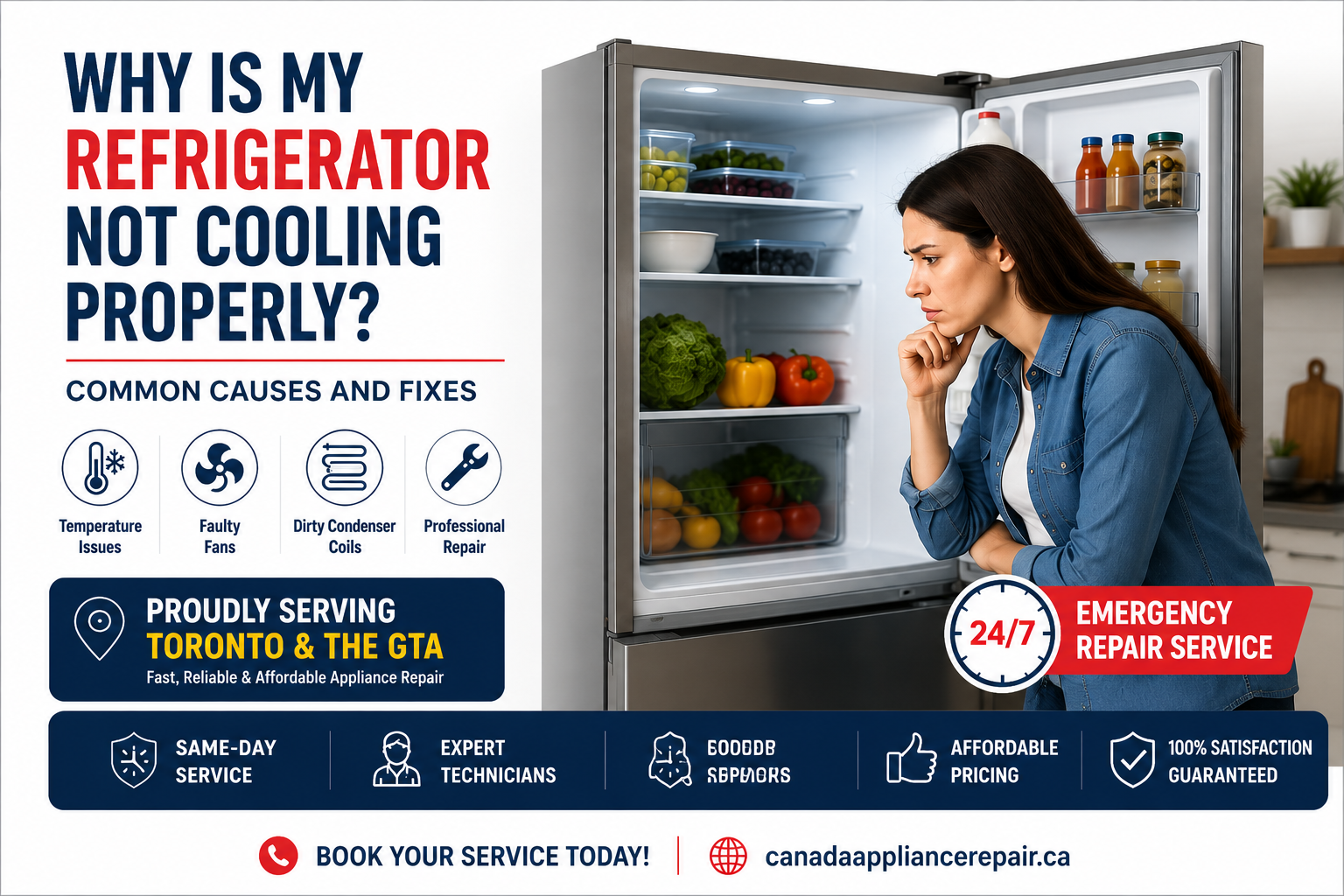
A refrigerator that stops cooling properly can quickly become a stressful problem for homeowners in Canada. From spoiled groceries to water leaks and rising electricity bills, refrigerator cooling problems should never be ignored. Understanding the common causes behind cooling issues can help you identify problems early and determine when it’s time to call a professional appliance repair technician.
Whether you own a Samsung, LG, Whirlpool, GE, Frigidaire, Bosch, or KitchenAid refrigerator, several common issues can affect cooling performance.
Dirty Condenser Coils
Dirty condenser coils are one of the most common reasons refrigerators stop cooling efficiently. These coils help release heat from the appliance. Over time, dust, pet hair, and debris can build up around the coils and reduce cooling performance.
Common signs include:
- Refrigerator running constantly
- Warm refrigerator compartment
- Higher electricity bills
- Overheating near the back of the appliance
Canadian homes often experience increased indoor dust buildup during winter months when heating systems run continuously. Cleaning condenser coils every six months can help improve efficiency and extend appliance lifespan.
Faulty Evaporator Fan Motor
The evaporator fan circulates cold air throughout the refrigerator and freezer sections. If the fan motor stops working, cold air may not move properly between compartments.
Signs of evaporator fan problems include:
- Freezer cold but refrigerator warm
- Loud humming or buzzing noises
- Uneven temperatures inside the refrigerator
A certified appliance repair technician can inspect the motor and determine whether replacement is necessary.
Damaged Door Seals
Refrigerator door seals, also called gaskets, help keep cold air inside the appliance. Cracked, loose, or worn seals allow warm air to enter, forcing the refrigerator to work harder.
You may notice:
- Condensation around the doors
- Food spoiling faster
- Excessive frost buildup
- Refrigerator constantly cycling
Replacing damaged door seals can improve energy efficiency and cooling performance.
Blocked Air Vents
Airflow inside a refrigerator is essential for maintaining consistent temperatures. Overloading shelves or blocking vents can prevent cold air from circulating properly.
To improve airflow:
- Avoid overpacking food items
- Leave space between containers
- Keep interior vents unobstructed
Simple airflow adjustments may restore proper cooling without requiring major repairs.
Thermostat Problems
A malfunctioning thermostat may prevent the refrigerator from maintaining the correct temperature. If the thermostat fails to communicate properly with the cooling system, the refrigerator may stop cooling consistently.
Symptoms include:
- Refrigerator too warm
- Inconsistent temperatures
- Compressor not cycling properly
Modern refrigerators often display digital error codes that can help technicians diagnose thermostat-related issues quickly.
Compressor Issues
The compressor is one of the most important components in a refrigerator cooling system. If the compressor becomes damaged or overheats, the refrigerator may stop cooling entirely.
Warning signs include:
- Clicking sounds
- Loud buzzing noises
- Warm refrigerator and freezer sections
- Compressor overheating
Compressor repairs should only be handled by trained appliance repair professionals because they involve electrical and refrigerant system components.
If you need professional help, visit the refrigerator repair service page on Canada Appliance Repair for reliable appliance repair services.
Refrigerant Leaks
Low refrigerant levels can significantly reduce cooling performance. Refrigerant leaks require professional diagnosis and repair.
Possible signs include:
- Refrigerator running constantly
- Weak cooling performance
- Ice buildup on coils
- Hissing sounds
Ignoring refrigerant issues can lead to compressor damage and more expensive repairs later.
When to Call a Refrigerator Repair Technician
You should contact a professional appliance repair technician if:
- Food is spoiling quickly
- The refrigerator stops cooling completely
- You notice burning smells
- Water leaks are causing damage
- The compressor becomes extremely hot
Quick professional repairs can help prevent costly food loss and additional appliance damage.
For additional appliance troubleshooting tips, read our related blog:
“5 Signs Your Washing Machine Needs Professional Repair.”
How to Prevent Refrigerator Cooling Problems
Routine maintenance can help extend the lifespan of your refrigerator and reduce emergency breakdowns.
Helpful maintenance tips:
- Clean condenser coils every 6 months
- Inspect door seals regularly
- Avoid overloading the refrigerator
- Keep air vents clear
- Schedule professional appliance maintenance
Preventive care helps improve energy efficiency and reduces repair costs over time.
FAQs About Refrigerator Cooling Problems
A refrigerator may run without cooling properly because of dirty condenser coils, faulty evaporator fans, thermostat problems, blocked airflow, or compressor issues.
In many cases, yes. Refrigerator repair is often worthwhile if the appliance is under 10 years old and repair costs are lower than replacement costs.
Yes. Dirty condenser coils reduce heat transfer efficiency and can make refrigerators struggle to maintain proper temperatures.
Most refrigerators last between 10 and 15 years depending on maintenance, usage, and appliance brand quality.
Professional appliance technicians commonly repair Samsung, LG, Whirlpool, GE, Frigidaire, Bosch, KitchenAid, and Maytag refrigerators.
Most refrigerators should be professionally inspected and maintained at least once a year to improve performance and reduce repair risks.