
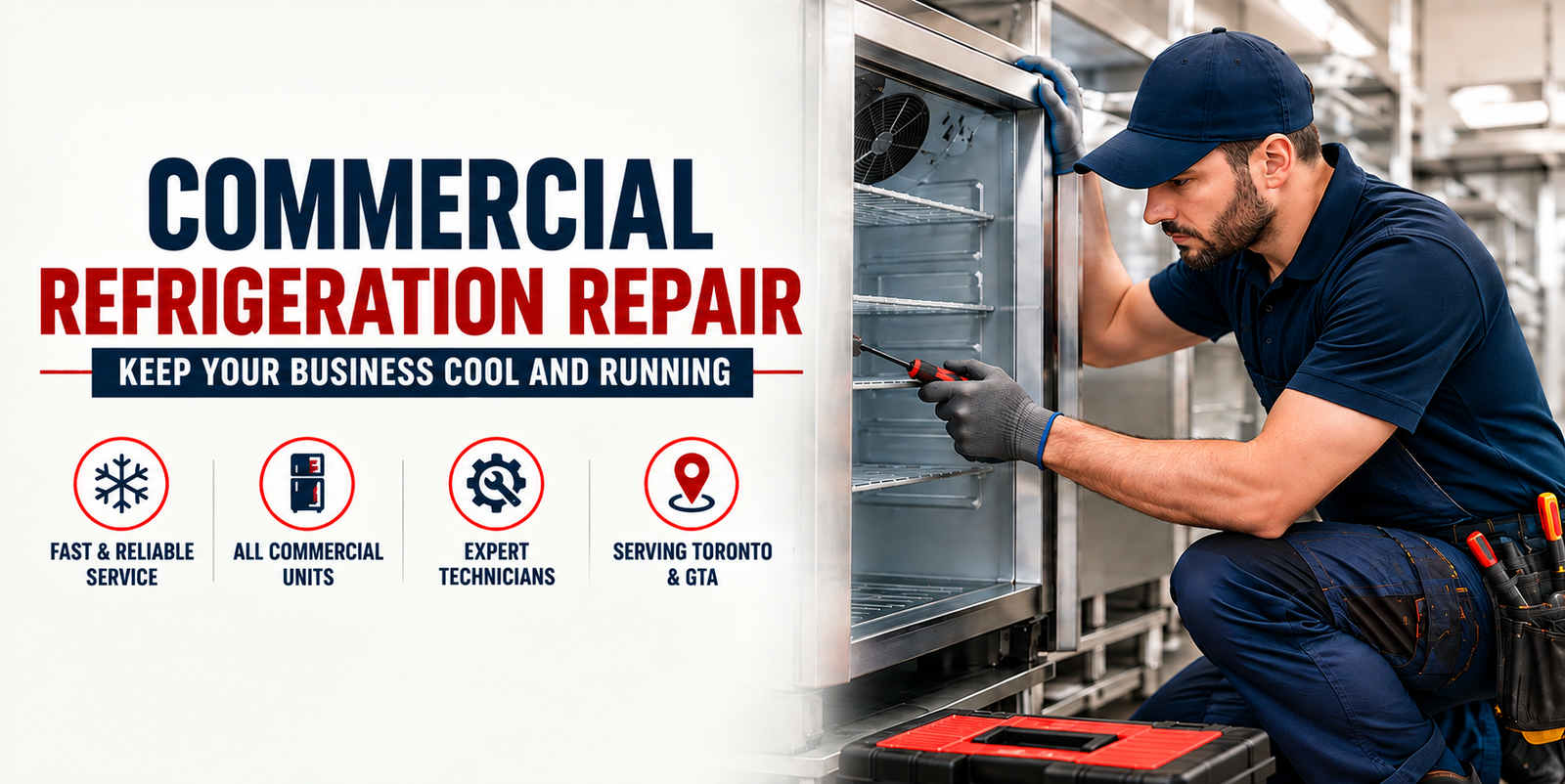
Commercial refrigeration equipment is essential for restaurants, grocery stores, cafés, convenience stores, and other food businesses. When a walk-in cooler, reach-in refrigerator, or commercial freezer stops working properly, spoiled inventory and lost revenue can follow quickly. Commercial refrigeration repair helps identify the cause of the problem and restore safe, reliable cooling before a minor issue becomes an expensive breakdown.
Quick Answer
Common commercial refrigeration problems include inadequate cooling, unusual noises, water leaks, ice buildup, compressor failure, faulty thermostats, and damaged door seals. Many issues are caused by dirty condenser coils, restricted airflow, electrical faults, or refrigerant problems. Prompt professional diagnosis can prevent food loss, equipment damage, and unnecessary business downtime.
What Are the Most Common Commercial Refrigeration Problems?
Commercial refrigeration systems operate for long hours and handle demanding workloads. Over time, components can wear out or become dirty, causing noticeable performance problems.
The most common issues include:
- Refrigerator not cooling properly: The temperature may rise because of airflow restrictions, condenser problems, thermostat faults, or refrigerant issues.
- Excessive ice buildup: Frost around the evaporator can restrict airflow and reduce cooling efficiency.
- Water leaking: Clogged drain lines, frozen drains, or damaged components can cause water to collect inside or around the unit.
- Compressor problems: A failing compressor may cause poor cooling, overheating, or unusual cycling.
- Strange noises: Buzzing, rattling, clicking, or grinding can indicate problems with fans, motors, compressors, or electrical components.
- Door seal damage: A worn gasket allows warm air into the cabinet, making the refrigeration system work harder.
Why Is My Commercial Refrigerator Not Cooling?
A commercial refrigerator that is not cooling should be inspected promptly. One common cause is a dirty condenser coil, which prevents the system from releasing heat efficiently.
Other possible causes include a faulty thermostat, blocked evaporator fan, failing compressor, restricted airflow, or refrigerant-related problems. Check that the doors are closing completely and that food products are not blocking internal air vents.
If the temperature continues rising, move perishable products to a safe refrigerated location and arrange commercial refrigeration repair rather than continuing to operate a malfunctioning unit.
What Causes Ice Buildup in a Commercial Freezer?
Ice buildup usually occurs when moisture enters the freezer or the defrost system is not operating correctly. A faulty defrost heater, timer, thermostat, or sensor can allow excessive frost to accumulate around the evaporator.
A damaged door gasket can create the same problem by allowing warm, humid air inside.
Expert recommendation: Do not simply keep removing the ice without finding the cause. Repeated frost buildup can restrict airflow and place additional strain on the refrigeration system.
How Can You Tell if a Commercial Refrigeration Compressor Is Failing?
The compressor is one of the most important components in a refrigeration system because it circulates refrigerant through the cooling cycle. A compressor problem can cause poor cooling, overheating, frequent cycling, or unusual humming and clicking sounds.
A technician should test the compressor, electrical components, operating pressures, and other parts before recommending replacement. Compressor replacement can be a significant repair, so accurate diagnosis is important.
Commercial Refrigeration Repair vs. Replacement: Which Is Better?
The right choice depends on the equipment’s age, condition, repair cost, and overall reliability.
| Repair | Replacement |
|---|---|
| Usually lower upfront cost | Higher initial investment |
| Ideal for isolated component failures | Better for severely damaged equipment |
| Can extend equipment life | May improve efficiency |
| Less installation downtime | May reduce recurring repair costs |
For example, replacing a worn door gasket or faulty fan motor is often more practical than replacing an entire refrigerator. However, an older unit with repeated compressor and electrical problems may justify replacement.
How Can Toronto Businesses Prevent Refrigeration Breakdowns?
Regular maintenance can identify small problems before they become emergency repairs. Businesses should keep condenser coils clean, inspect door gaskets, maintain clear airflow, and monitor refrigerator and freezer temperatures.
A simple maintenance routine should include:
- Check temperatures regularly.
- Clean condenser areas according to manufacturer recommendations.
- Inspect door seals for cracks or gaps.
- Keep vents and evaporators unobstructed.
- Watch for unusual sounds or excessive frost.
- Schedule professional servicing when performance changes.
For restaurants and food-service businesses across Toronto and the GTA, preventive maintenance can help reduce unexpected downtime and protect valuable inventory.
When Should You Call a Commercial Refrigeration Technician?
Call a professional when the equipment cannot maintain its required temperature, repeatedly trips a breaker, leaks water, develops heavy frost, makes unusual noises, or shows signs of compressor or electrical failure.
Commercial refrigeration systems contain electrical components and, depending on the repair, refrigerant under pressure. Attempting complex repairs without the proper training and equipment can make the problem worse and create safety risks.
Final Thoughts
Reliable commercial refrigeration repair is critical for businesses that depend on safe and consistent food storage. Whether the problem is poor cooling, ice buildup, leaking water, a damaged gasket, or compressor trouble, early diagnosis can prevent larger repair bills and costly inventory loss. Canada Appliance Repair provides appliance repair services for businesses throughout Toronto and the GTA. Need professional commercial refrigeration repair? Call (416) 887-5839 today to schedule fast, dependable service anywhere in Toronto and the GTA.
Frequently Asked Questions
The cost depends on the equipment, failed component, labor required, and complexity of the repair. A minor thermostat or gasket issue may cost considerably less than a compressor or sealed-system repair. A professional inspection is the best way to determine the actual problem and provide an accurate repair recommendation.
Simple repairs, such as replacing a damaged gasket, thermostat, or fan component, may be completed relatively quickly when replacement parts are available. More complex problems can take longer, particularly if specialized parts are required. The technician should explain the expected repair time after diagnosing the equipment.
A loud commercial freezer may have a problem with the evaporator fan, condenser fan, compressor, or another moving component. Rattling, grinding, clicking, and unusual humming should not be ignored. Identifying the noise early can help prevent a small mechanical problem from developing into a major refrigeration failure.
The ideal service schedule depends on equipment type, operating conditions, usage, and manufacturer recommendations. High-use restaurant and food-service equipment may require more frequent attention. Regular cleaning, temperature monitoring, and professional inspections can help identify worn components before they cause an unexpected breakdown.
Yes. Many commercial refrigerators can be repaired when the problem involves an individual component such as a fan motor, thermostat, gasket, or electrical part. Replacement may make more financial sense when equipment is very old, inefficient, or experiencing repeated major failures.
First, check that the unit has power and that the doors are closing properly. Avoid opening the refrigerator unnecessarily and protect perishable food by moving it to suitable cold storage if necessary. If the temperature does not recover, contact a qualified commercial refrigeration technician for diagnosis.
Yes. Professional maintenance can uncover problems that are not obvious during everyday use, including restricted airflow, worn components, electrical issues, and developing refrigeration-system faults. Regular service can improve reliability, reduce unexpected downtime, and help businesses avoid preventable food-storage problems.